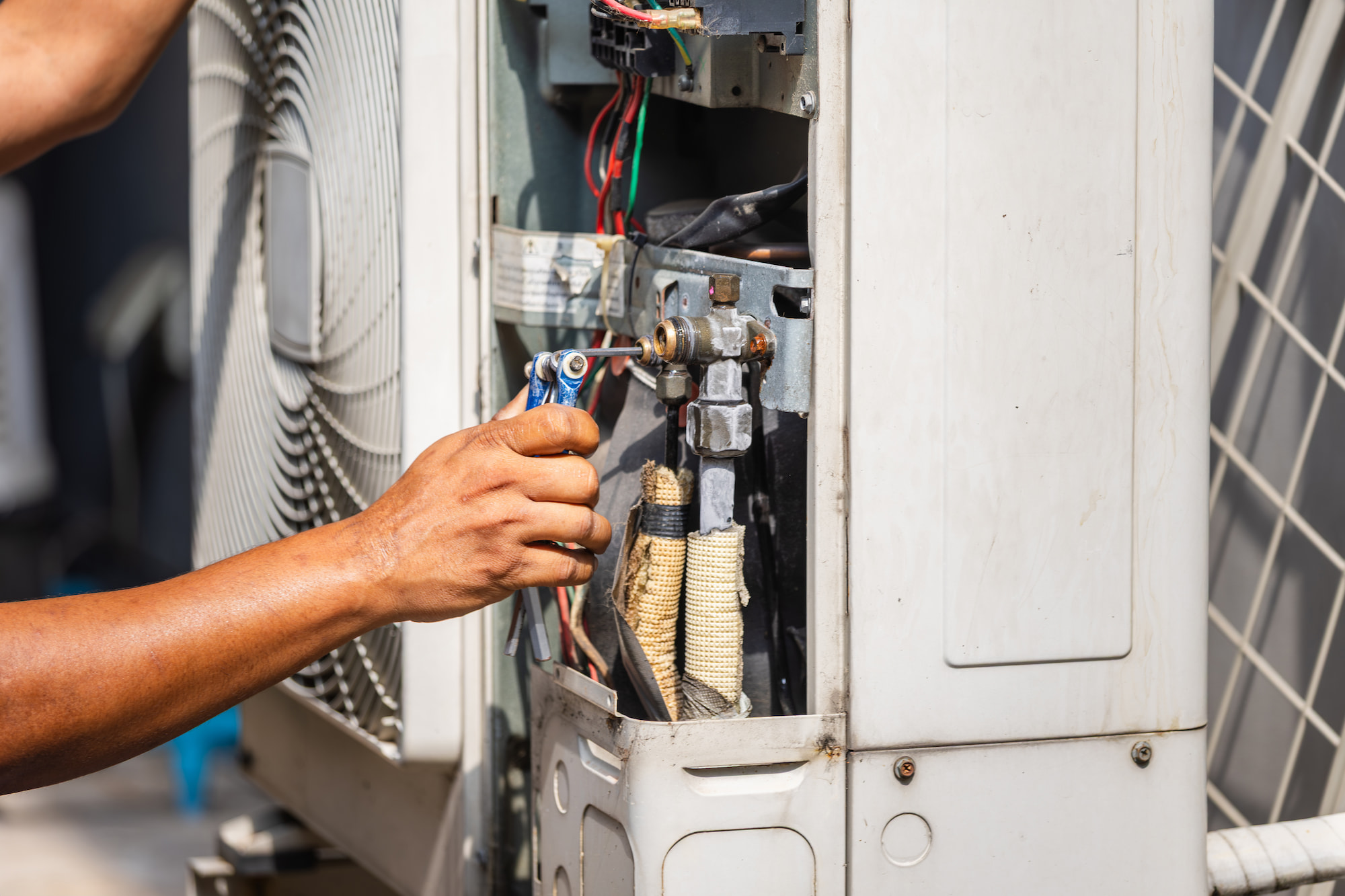
A compressor that quits in year nine isn’t a fluke in the Rio Grande Valley. It’s the most expensive single part in the system, and around here it’s usually the first big one to fail. AC compressor lifespan in Harlingen runs shorter than the equipment tables predict, and the causes are specific enough to name. Ecotech Heating & Cooling has been pulling gauges on Valley systems since 2018, and the same short list of conditions turns up on nearly every burned-out unit.
The Service Life ASHRAE Promises
ASHRAE, the engineering society whose standards most of this industry runs on, publishes a service life table. A residential single or split package air conditioner gets a median of 15 years on that chart.
Most manufacturers back the compressor with a 10 year parts warranty, which tells you what the factory expects to cover.
Those medians come from the whole country. They include Ohio and Montana, where a system runs four months a year and sits idle the rest.
Nine Months of Cooling Changes the Math
Cooling season here runs nine months or longer. Five of those months average above 90 degrees, May through September, and July and August both average a high of 95. In an average July, every day but a fraction of one rates muggy or worse, so the system fights moisture on top of heat.
Humidity is the part that gets missed. Wringing water out of the air takes run time, so the compressor stays loaded long after the thermostat is satisfied.
A compressor in the Valley can log two to three times the run hours a national median quietly assumes. Nobody published that ratio. It’s what eight years of Harlingen work orders add up to. It’s also the biggest reason a 15 year median doesn’t survive this climate.
“A compressor almost never dies of old age down here. It dies of being asked to work while something upstream of it has already failed.“
Low Charge Starves the Compressor Twice
Refrigerant does two jobs besides cooling the house. In a sealed residential compressor, the cool suction gas returning from the indoor coil cools the motor windings. Joe Marchese, a senior field support engineer at Heatcraft Refrigeration Products, calls these refrigerant cooled compressors for that reason. The second job is oil delivery, since compressor oil rides the refrigerant around the loop and comes home on the suction line.
Run the charge low and the compressor loses its cooling and its oil supply at the same time. Slower suction gas leaves oil stranded in the coil and line set. A panel of manufacturer engineers assembled by ACHR News, including Scott Riegel of Trane and Phil Oglesby of Rheem, calls overheating a main compressor killer, and low charge is the shortest road there.
A federal study led by Piotr Domanski at the National Institute of Standards and Technology put numbers on it. His team ran a 30 percent undercharge and measured cooling capacity down almost 15 percent with efficiency off 12 percent.
Of the faults they tested in the equipment itself, undercharge had the most potential to drag efficiency down.
Heat finishes the job. John Tomczyk, HVACR professor emeritus at Ferris State University, puts the ceiling at 225 degrees on the discharge line. At that reading the valve inside is already near 300, hot enough to start cooking the oil into carbon.
The Conditions That Take Years Off a Compressor
- Refrigerant charge below the manufacturer’s spec plate. The motor loses its cooling and the oil stops making the return trip.
- A condenser coil matted with dirt, grass clippings, and windblown grit. Heat can’t leave the coil, so head pressure and discharge temperature climb together.
- A run capacitor that has drifted below the strength on its label. Every start pulls heavier current for longer.
- A filter left in past 30 days during peak season. Restricted return air drops suction pressure, so less gas comes back to cool the motor.
- Salt corrosion where the aluminum fin meets the copper tube. The joint loses heat transfer long before the coil looks bad.
- Nine straight months of run time with no service in between. Every item above compounds instead of resetting.
The Capacitor Gets Blamed Far Too Late
A run capacitor shifts the phase of the current feeding the compressor’s start winding, and that shift is what produces turning force. As capacitance falls, the motor takes longer to reach speed, drawing current like a stalled motor the whole time. All of it becomes heat inside the windings.
Cornell Dubilier rates its motor run capacitors for a 70 degree Celsius case, roughly 158 Fahrenheit, against a design objective of 60,000 hours. A capacitor bolted inside a sun baked cabinet through a Harlingen July spends the season eating into that margin. A capacitor testing 10 percent low still starts the system, and it takes life off the compressor every time it does. Most get replaced only after the unit quits entirely, by which point the compressor has absorbed a few hundred rough starts it never needed.
Head Pressure Is a Coil Problem First
Head pressure, the pressure the compressor pushes against, is the number that kills compressors, and a fouled condenser coil is the fastest way to raise it. Fins loaded with debris can’t shed heat, so the compressor squeezes against more and more pressure, and discharge temperature climbs straight toward the limit Tomczyk warns about.
The indoor side matters just as much. The Department of Energy says routinely replacing or cleaning filters can cut an air conditioner’s energy use by 5 to 15 percent, and that same airflow is what keeps enough gas flowing back to cool the compressor. Grit and pollen load a filter here faster than the package suggests.
Coil washing, charge verification, and capacitor testing are the jobs that move the needle on compressor life. They’re also the backbone of what a maintenance visit covers.
Where the Unit Sits Changes the Wear Rate
Gulf salt air reaches a long way inland. A Texas A&M University study by Phillip Ryan Grisham left two air conditioners outdoors in Galveston for about a year. Efficiency dropped 8.3 percent on one unit and 11.5 percent on the other, moisture removal fell almost 21 percent, and the aluminum pitted where the fins met the copper tubes.
Ecotech works throughout Cottonwood Estates and Country Club North, and on those calls the thing that predicts coil condition is rarely the subdivision. It’s placement. A condenser on a west wall taking full afternoon sun runs hotter than the identical unit on a shaded north side, and one crowded against a fence, inside the two feet of clearance the manual calls for, breathes its own discharge air all day.
Shade helps, but only the kind that doesn’t shed. A homeowner near Pendleton Park who tucks the condenser under mature landscaping buys cooler air and a coil that needs checking more often.
When It Isn’t the Compressor at All
Plenty of no-cool calls that sound like a dead compressor turn out to be something cheaper. A tripped breaker. A contactor with pitted points. A float switch that killed the system on a full drain pan. A low voltage wire chewed through under the house.
The compressor takes the blame because it’s the part that stopped making noise. Before assuming the worst, run the checks worth running yourself.
The Symptoms Worth a Service Call
- The outdoor unit hums for a second or two before the compressor reaches speed.
- Air at the vents feels cool but the house never gets down on a 95 degree afternoon.
- The large copper line at the outdoor unit is warm instead of cold and sweating.
- The outdoor fan spins while the compressor stays silent.
- The breaker feeding the condenser trips more than once in a season.
- Frost or ice shows up on the refrigerant lines or the indoor coil.
- The condenser fins look oily or show white powdery buildup at the tube joints.
- The system was charged last summer and needs charge again this summer.
Charge, Coil, Capacitor, Filter
Charge, coil, capacitor, and filter are the four things standing between a compressor and an early replacement. Keep all four in spec through a nine month cooling season and a Valley compressor gets closer to a normal age. Let one slide and the clock speeds up, months before anything sounds wrong.
The shop is Anthony Longoria’s, opened in 2018 after ten years of trade work that started in 2008. We carry a Texas TDLR Air Conditioning and Refrigeration Contractor license and EPA Section 608 certification, and we’re an authorized Ruud dealer with more than 60 Google reviews. Call (956) 300-2673 or reach us through the contact page if you want gauges on the system before August does its worst. We respond within 24 hours, and a fully dead system gets priority.