Harlingen sits in one of the hardest working cooling climates in the country. NOAA’s 1991 to 2020 normals put Harlingen’s own airport station at 4,220 cooling degree days a year. Chicago O’Hare normals at 1,003. Same equipment, same warranty, more than four times the annual load. So when a homeowner asks whether to repair or replace AC in Harlingen, the national answer and the local answer land on opposite sides of the line. Ecotech Heating & Cooling has spent eight years watching Valley systems age faster than the manuals say they should.
What the National Guides Actually Say
The federal ENERGY STAR program keeps a short replacement list. It says to consider replacing a heat pump or air conditioner more than 10 years old, and to look harder if repairs are getting frequent while the power bill climbs. The same program puts the savings from a high efficiency ENERGY STAR unit at up to 20 percent of heating and cooling costs.
Contractors lean on a second yardstick, the fifty percent rule. If the repair estimate lands anywhere near half of what a new system would run, replacement is the better spend.
No agency publishes that rule, and it doesn’t need one, because it’s a ratio. It holds no matter what equipment costs this year. Using it takes one step: get the repair quote and a replacement quote on the same visit, then compare. Any honest shop will hand you both.
Why Valley Run Hours Break the Ten Year Line
Both yardsticks assume something that isn’t true here. They assume your system gets an off season.
A central air conditioner rated for 15 to 20 years earns that range in a climate where it sits quiet from October through May. Ours doesn’t get that break. The season runs nine months and sometimes ten, five of those months average highs above 90F, and a typical July gives you less than one full day all month that isn’t muggy. Ten years of Harlingen run time puts more hours on a compressor than most northern systems see across their entire service life.
Wear tracks hours, not birthdays. That is why a nine year old unit here can be further along than a fifteen year old unit in a mild climate, and why the replacement conversation starts earlier in the Valley than the brochures suggest.
“In a nine month cooling season, the most expensive repair is the one you make twice.“
Where the AC Repair or Replace Line Really Sits in Harlingen
Three inputs decide it. Age measured against run hours, repair cost measured against the life that’s left, and which refrigerant the system holds.
Our techs start asking the hard questions at eight years instead of ten. The national rule says half. Here the line drops to a third, because each repair has fewer good years left to buy. That eight year mark comes from Valley houses and Valley service tickets, not from a lab. Anyone telling you otherwise is quoting a national average at a subtropical house.
Signs the Money Belongs in a New System Instead
- The system is nine years old or older and this is the second repair in two cooling seasons.
- It uses R-22 refrigerant and the technician found a real leak, not normal loss.
- The compressor or the evaporator coil failed and the unit is out of parts warranty.
- Your electric bill climbed year over year while your thermostat settings and household stayed the same.
- Rooms that used to hold temperature now drift three or four degrees apart by late afternoon.
- The house feels clammy at the set temperature, meaning the system cools but no longer pulls moisture.
- The repair estimate lands anywhere near a third of the installed price of new equipment.
The R-22 Problem That Changes the Arithmetic
EPA phased out new production and import of most HCFCs as of 2020. That includes HCFC-22, the refrigerant sold as R-22 and still called Freon by most homeowners. Running one of those systems is legal. Servicing one is legal. Every pound that goes into it now has to come from recovered, reclaimed, or previously stockpiled supply, because none is being manufactured or imported.
A capped supply against steady demand only moves price one direction. A leak on an R-22 system is a different financial event than the identical leak on an R-410A system, even when the labor is the same. If your unit runs on R-22 and it’s actually leaking, the repair math almost always tips toward replacement. Systems installed before roughly 2010 are the ones to check first. Our techs hold EPA Section 608 certification, the federal credential required to handle refrigerant at all.
What SEER2 Changed and Why It Pays Back Faster Here
On January 1, 2023, the Department of Energy replaced the SEER efficiency rating with SEER2. The new test procedure, Appendix M1, raises the external static pressure used in testing by up to five times so lab conditions look more like real ductwork. AHRI, the industry standards body, notes that minimally compliant equipment under the new metric runs about 7 percent more efficient than the old floor allowed. Texas falls in the DOE Southeast region, where split system air conditioners under 45,000 Btu/h must hit at least 14.3 SEER2.
That change lands harder in the Valley than it does up north. A house logging 4,220 cooling degree days recovers an efficiency upgrade in a fraction of the years a house at 1,003 would need. The percentage saved is the same in Chicago, but a Valley house gets four times the hours a year to collect it.
No two installs land on the same number. Tonnage, the SEER rating you pick, single stage versus variable speed, ductwork condition, refrigerant type and amount, and how hard the unit is to reach all move the quote. Anyone who hands you one should be able to say which of those drove it. Financing is available with approved credit. Our system replacement options page covers what a proper load calculation looks at.
Two Streets in Town, Two Different Answers
Stuart Place shows why a general rule fails. The housing stock there is older, the trees are mature, and plenty of those homes still run ductwork that was installed with the house. Mature shade genuinely cuts the cooling load. It does nothing for a duct system that has been leaking conditioned air into an attic for twenty years. Replacing the condenser and leaving that ductwork alone solves half the problem at full price.
The same split shows up in Fox Run and near McCullough Park. Two houses a mile apart can land on opposite answers, depending on duct condition and how many summers that specific unit has logged.
The Cheap Parts That Fake a Big Failure
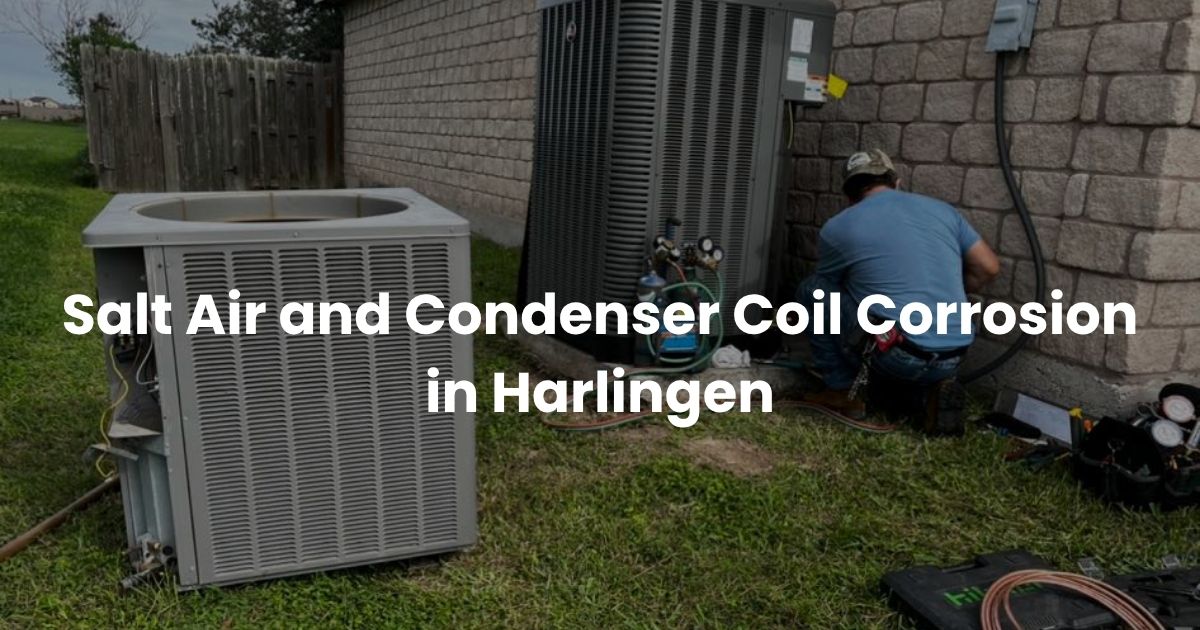
Weak airflow and warm supply air don’t automatically mean a dying compressor. A failed run capacitor produces the same complaint. So does a filter that packed solid weeks ahead of its rating, which happens fast around here. So does a dirty condenser coil crusted with salt air residue, or a thermostat mounted where it reads the wrong temperature.
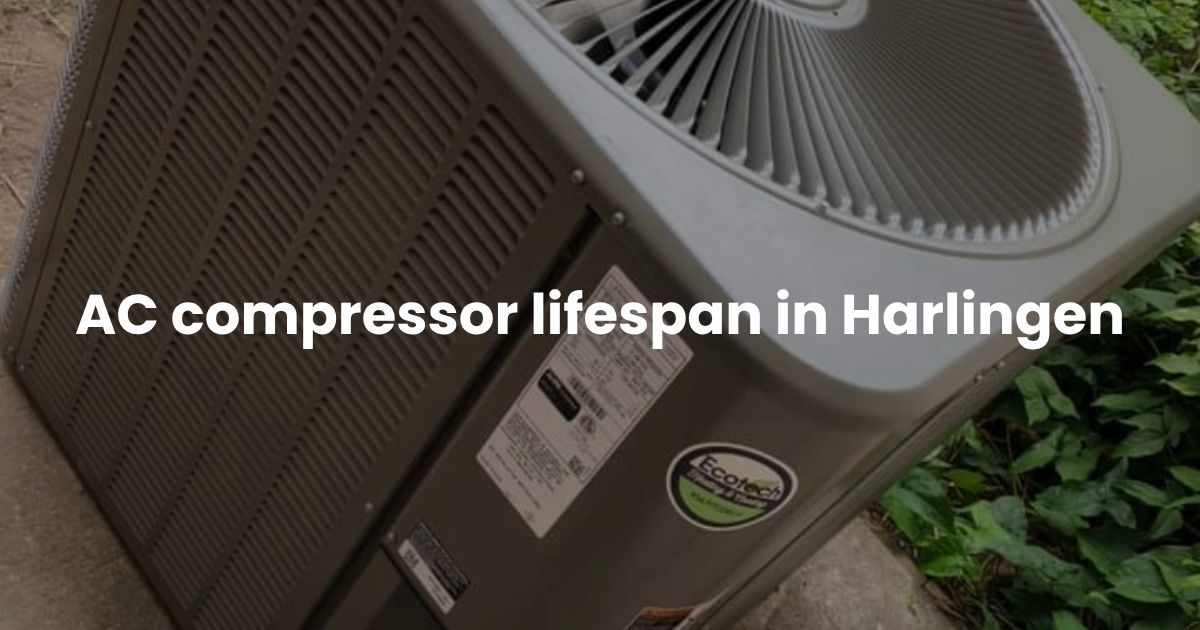
Diagnostics carry a fee, and that fee is cheaper than replacing equipment that had two good years left. Run hours also punish one component harder than the rest, which is why compressors fail early here compared to national failure curves.
What to Ask Before You Approve a Big Repair
- What refrigerant does this system use, and if it’s R-22, is this a leak or normal loss?
- Which part failed, and is it covered under any remaining manufacturer warranty?
- How many repairs has this unit had in the last three cooling seasons?
- What is the repair estimate as a percentage of installed replacement cost?
- Was the original system sized correctly for this house?
- What condition is the ductwork in, and would new equipment fight the same restriction?
- If I repair it now, how long before the next failure is realistic?
Getting a Straight Answer Before You Spend
Ecotech Heating & Cooling opened in 2018. Anthony Longoria’s trade experience runs back a decade further, to 2008. The company holds a Texas TDLR Air Conditioning & Refrigeration Contractor license, is an authorized Ruud dealer, and also installs and services Goodman and Lennox equipment. Over 60 Google reviews back that record.
Office hours run Monday through Friday, 8am to 6pm, and calls get a response within 24 hours, with priority dispatch when a system is fully down. Free estimates apply to new system installs, and every job carries a satisfaction guarantee. Call (956) 300-2673 or reach us through the contact page for the actual numbers on your house.